Welcome to
my website
My name is Gaspar Borges, and I’m an artist based in Lisbon, Portugal.
My work develops through series. Rather than treating each piece as an isolated image, I see every drawing or painting as part of a larger body of work that gradually unfolds over time.
Ideas return, visual elements reappear, and recurring characters slowly find their place. Each new piece adds another layer, allowing themes and relationships to evolve naturally without ever settling into a fixed meaning.
This website is my portfolio, where I share that ongoing process.
Below, you'll find some of my current series. Feel free to explore them in any order — simply choose one and see where it takes you.
I hope you enjoy your visit.
Cheers,
Gaspar


Mad Sven is a boy who chose to say no to job interviews, mortgages, marriage and divorce, meetings with clients and rush hours. All this, he threw into a box to open up later, when time makes him to get back in line, with the rest of the adults.
I’ve been returning to this acrylic and watercolour series since 2020. The characters have been slowly building up, piece by piece, with each drawing. Layer by layer, they accumulate — like Lígia, the polar bear who acts as a mother and protector in the series. Or Lev, the Siberian husky, who in my mind is the voice of reason.
Both of them try to do their best at parenting a kid who prefers killer bass lines and a samurai sword over a day delivering pizzas.
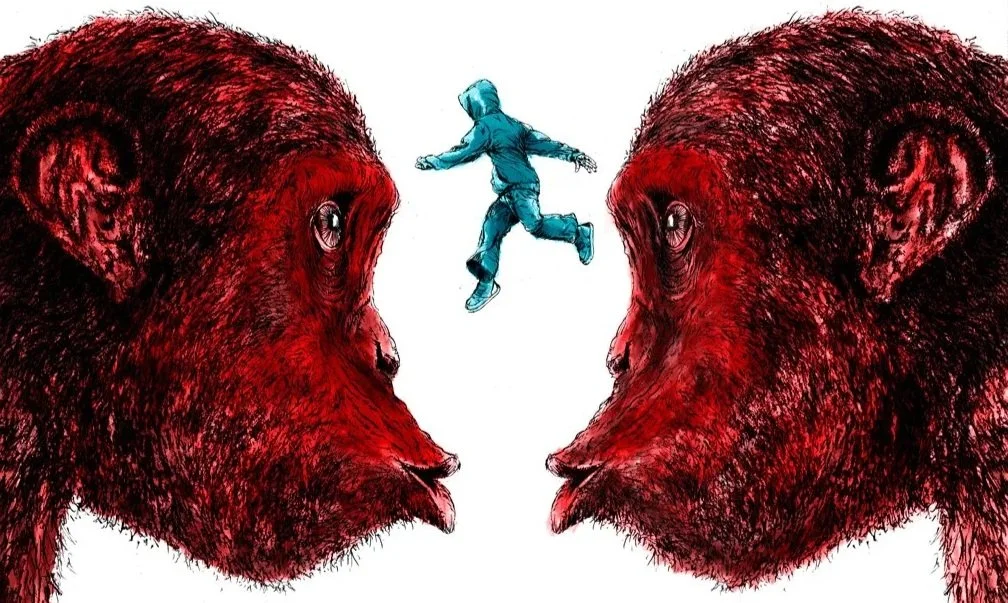
The Elegant
The Elegant comes out of a sense of absurdity and of how, sometimes, we take ourselves a bit too seriously, when in fact we are not all that important. At least, not on a universal scale.
When I started thinking about The Elegant, this irony felt like a good angle from which to approach what I was looking for: pomp and grandeur used to underline the irony and absurdity of certain codes. But in a kind of trailer-park aristocracy mood.
Distracted as we are, we keep moving forward without fully considering the outcomes that will eventually land in our laps because of the choices we are making.
Sometimes, it goes even further than that, when we are faced with a refusal to acknowledge that something feels wrong. When we see dissenting voices being silenced and sent to the corner of the room as punishment, and we are encouraged to ignore it.
Dimensions 29,7 × 42 cm
Medium Mixed medium - Pencil drawing and digital colouring
printed on 300 gr Canson watercolour paper
Year 2025
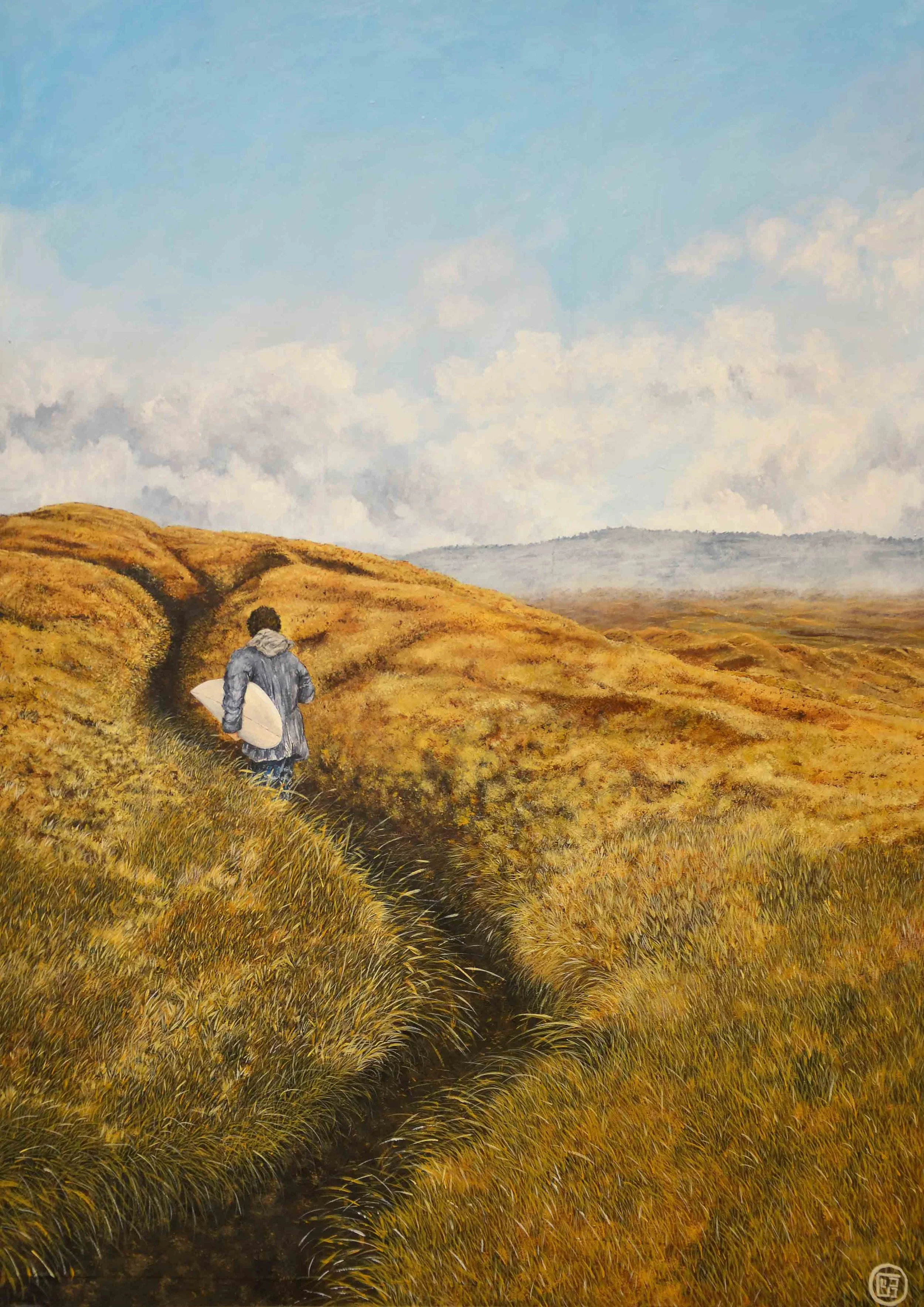
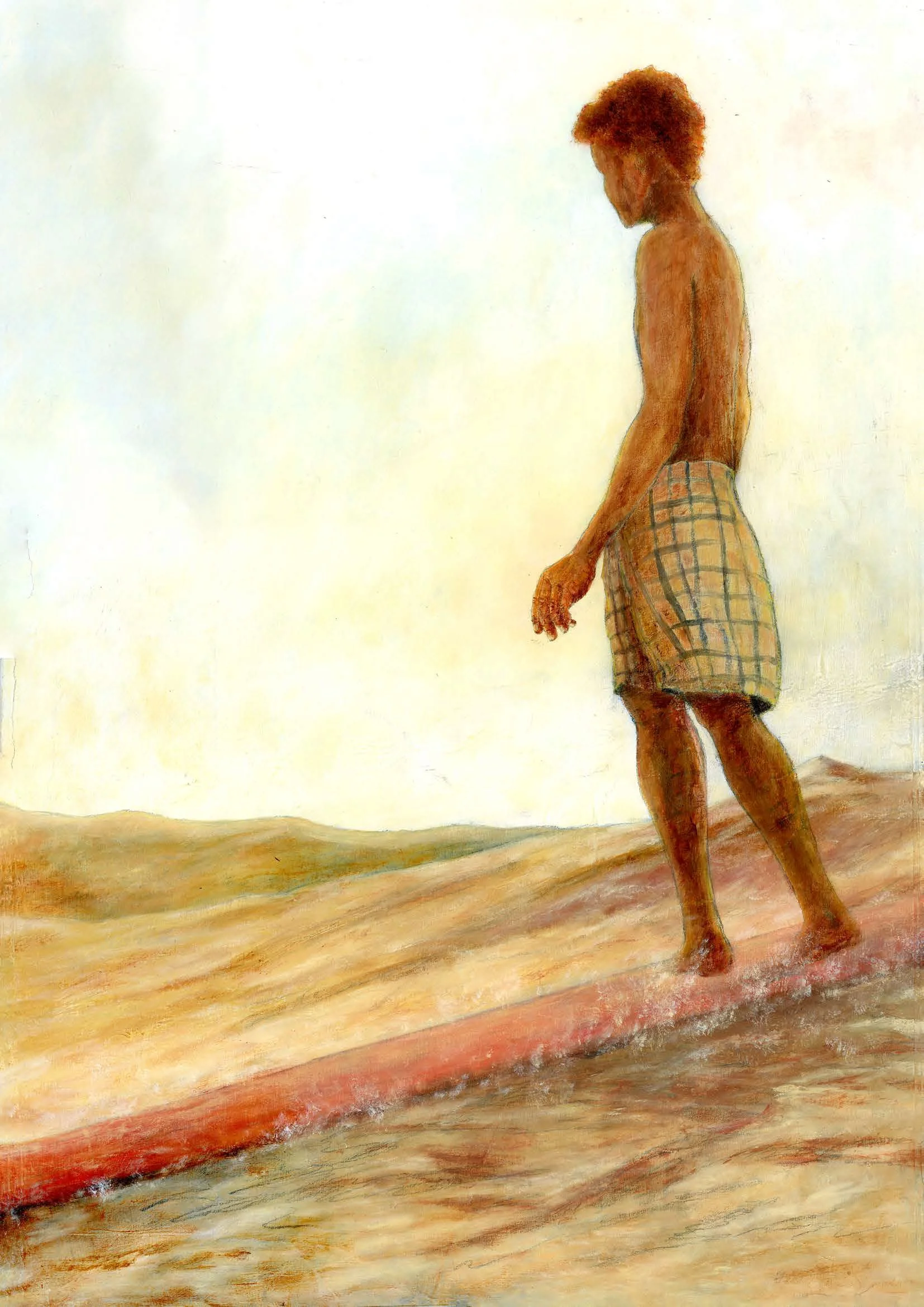
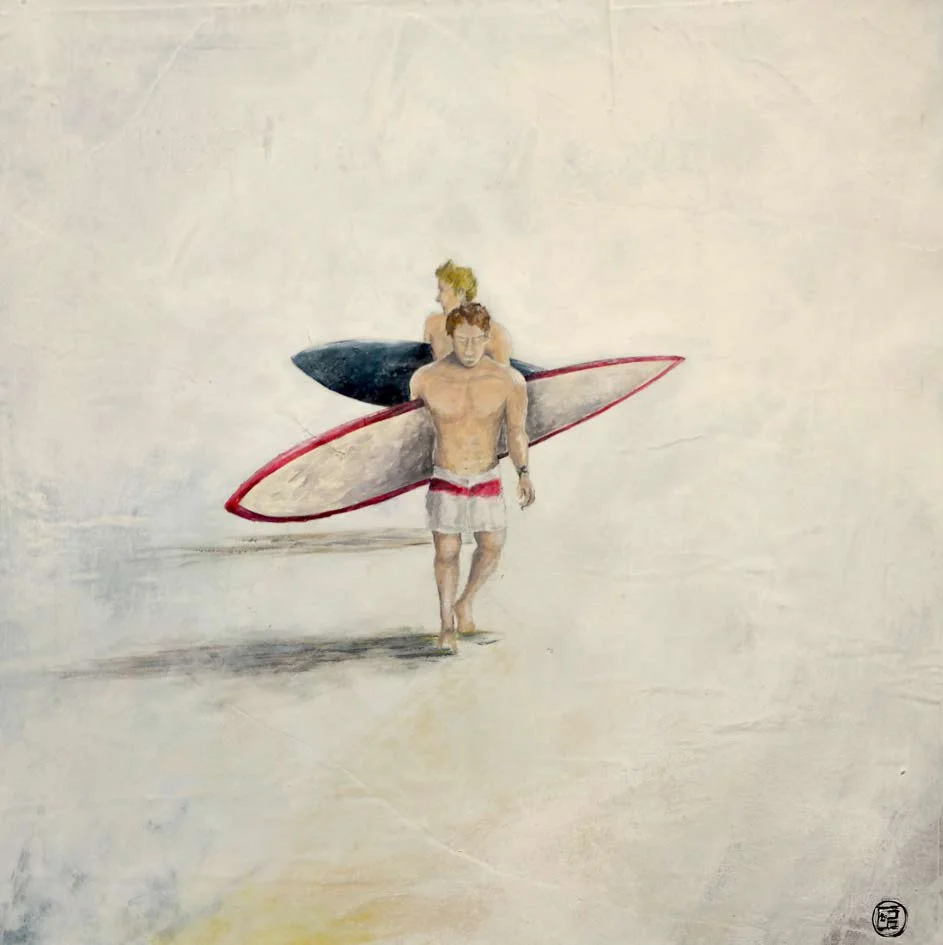
I have to start by saying that for years, surfing has been a shaping factor in my life. But in this collection of works I'm not particularly interested in surfing. I'm far more interested in the journey.
It’s the small things that make me keep coming back for more. Things like the dampness hanging in the air, slowly finding its way through a wool sweater in the early hours of the morning.
Or the silence we impose on our footsteps as we try to catch the distant sound of the waves beyond the dunes.
Surfing is the vocabulary, but it is not the subject of Conspiracy of Surfing.
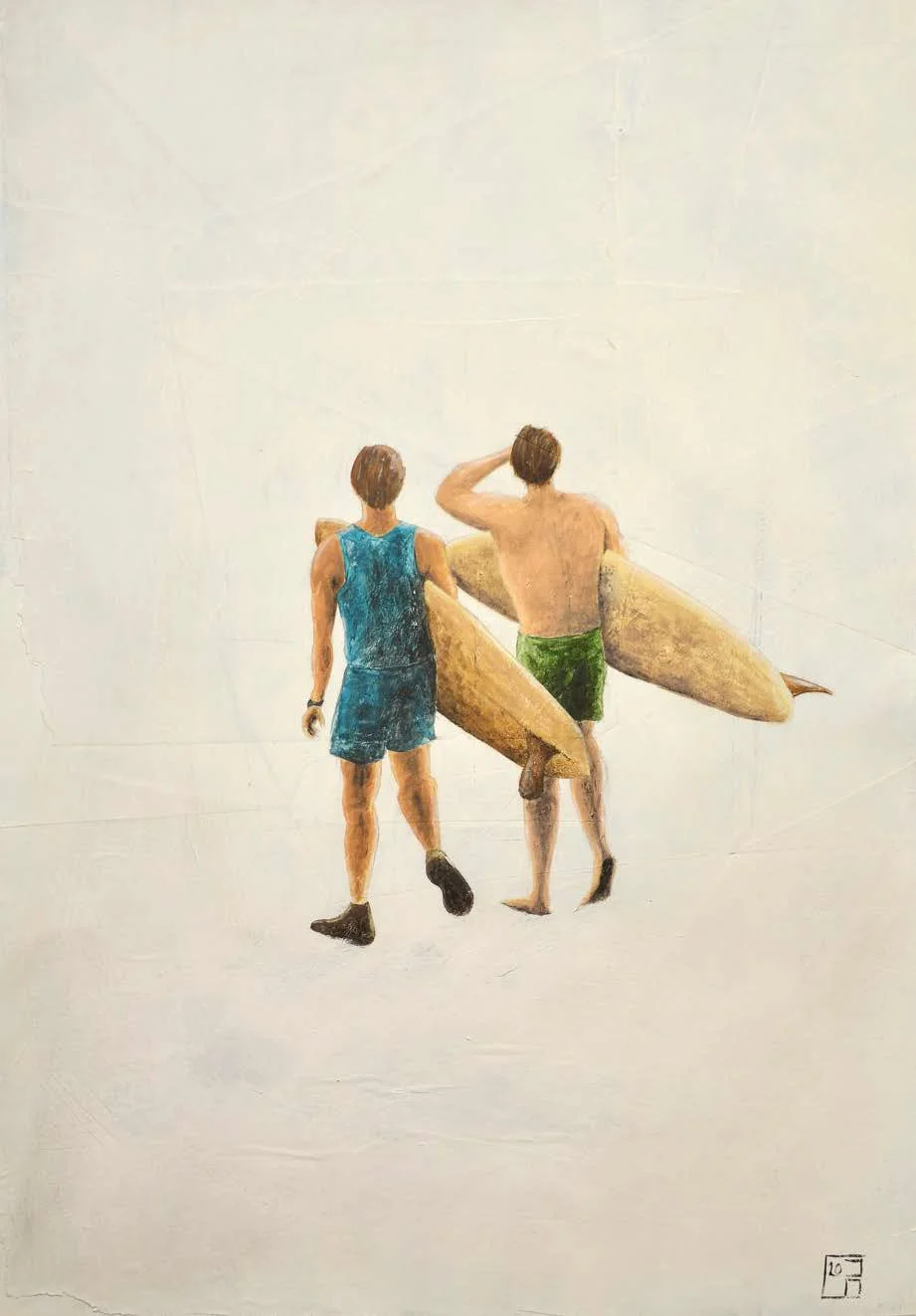
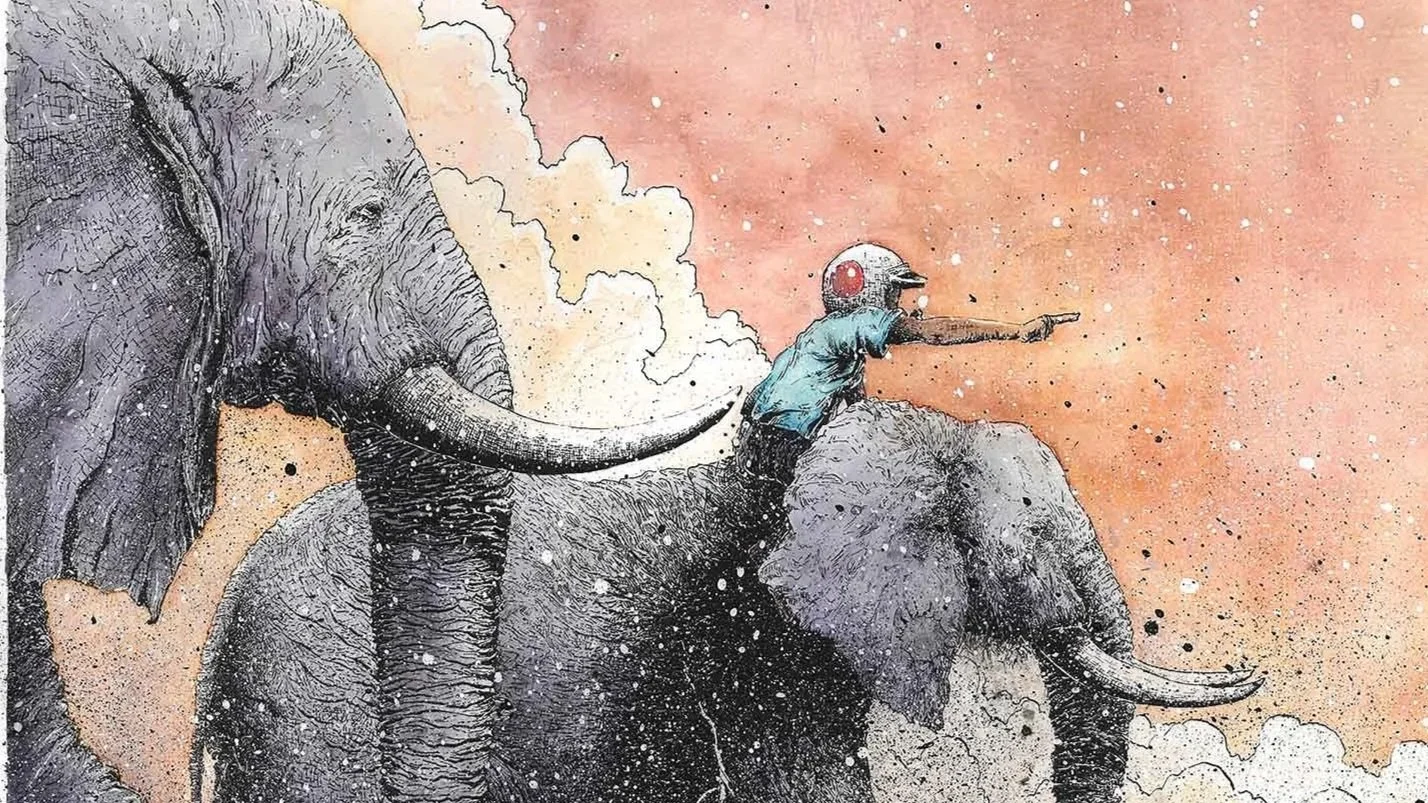
In Sharks Also Dance, I have been working with graphite, marker pen, and then watercolour or acrylic to colour the drawings.
Once again, I seem to come back to a recurring language: freedom, companionship, and innocence. These are the kinds of things that I see spread throughout a part of my body of work. I believe it is not a coincidence. I am an only child and, not having had any brothers or sisters, I miss them. So my best guess is that I am projecting onto the paper wishes and frustrations for someone who is not there.
But that's not all. I feel bonds challenging the borders of the paper. They travel from drawing to drawing and create a pattern throughout the series. The backs of these elephants are home for the child. They are also his high towers, from which he gets to reach wherever he wants. Unlikely companions and impossible journeys. Through the eyes of a child, the unfamiliar and even fear open up to wonder.
Fatherhood.
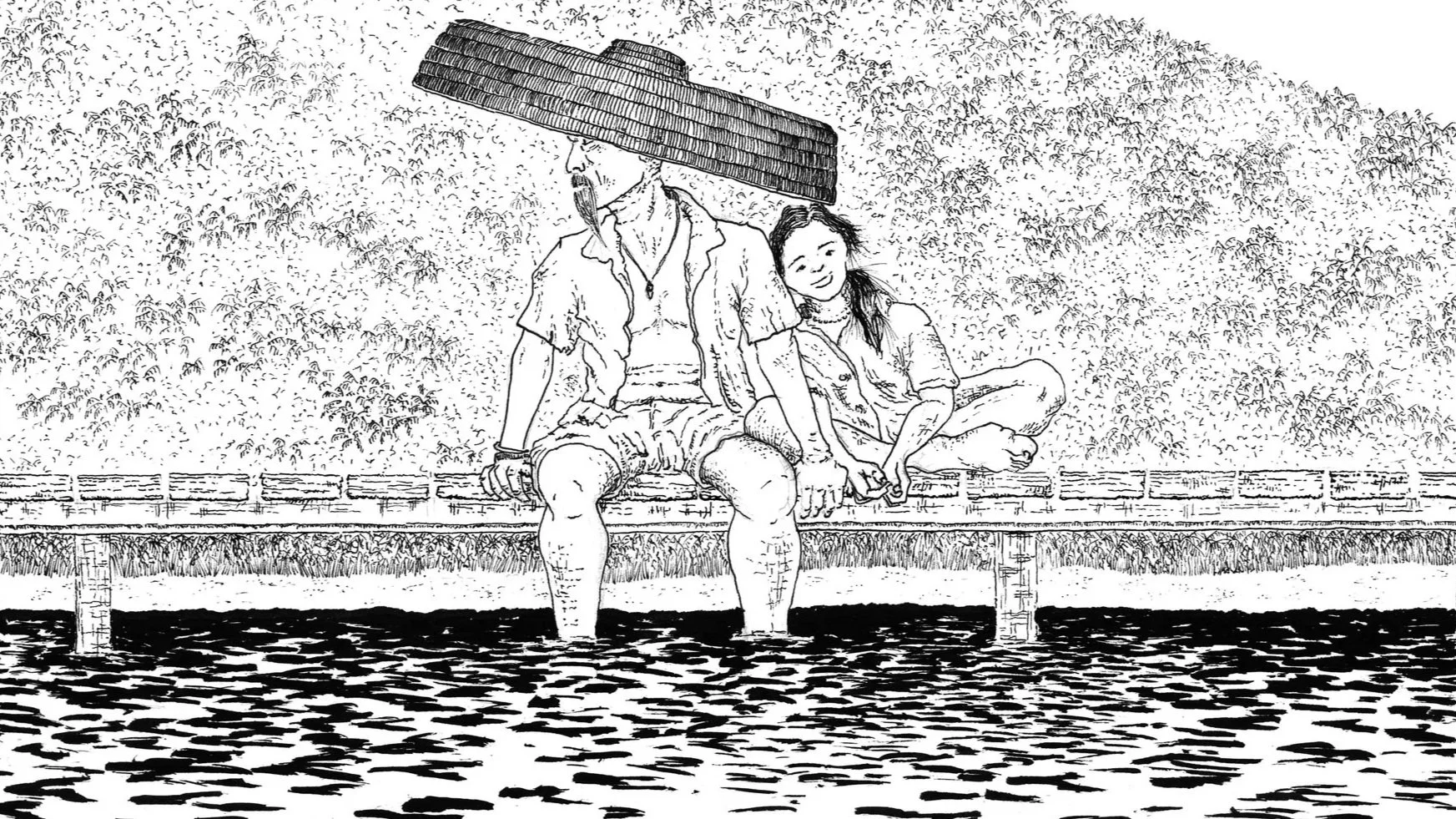
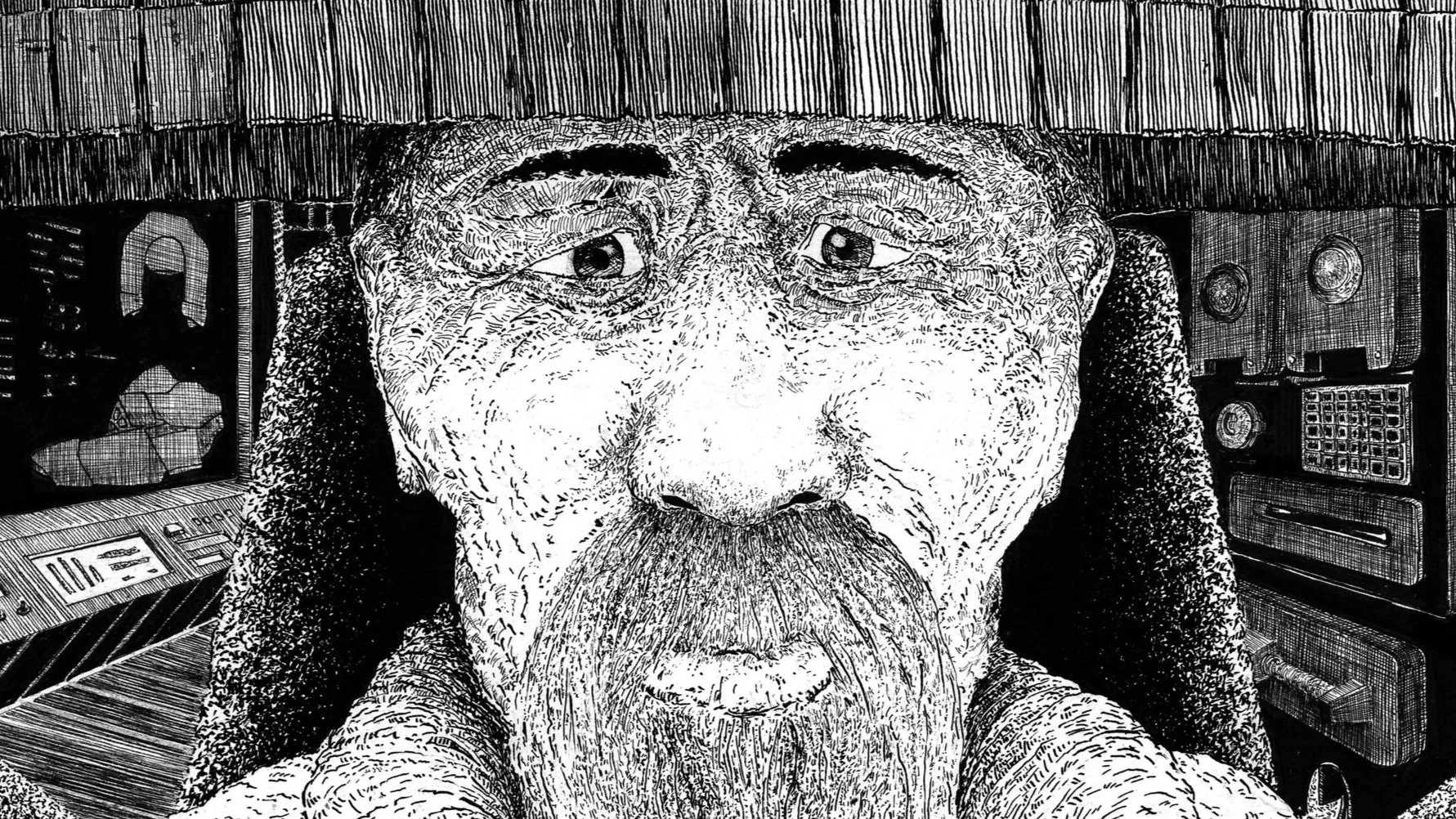
The concept feels like an echo chamber, a word that keeps returning again and again. It spreads throughout my body of work, and I do not resist it either. I find it rich enough to welcome its visits whenever they happen. It is not the first time, and I doubt it will be the last.
I do not approach it consciously. The word father enters like a ronin through the seed of a new idea. Stealthily, and often without my noticing, it lays down foundations that guide the work's path of growth.
Ultimately, “I Am Not a Mormon” is about this thing we call fatherhood and the refusal of resignation, that comes with it.
Mississipi Kamikaze
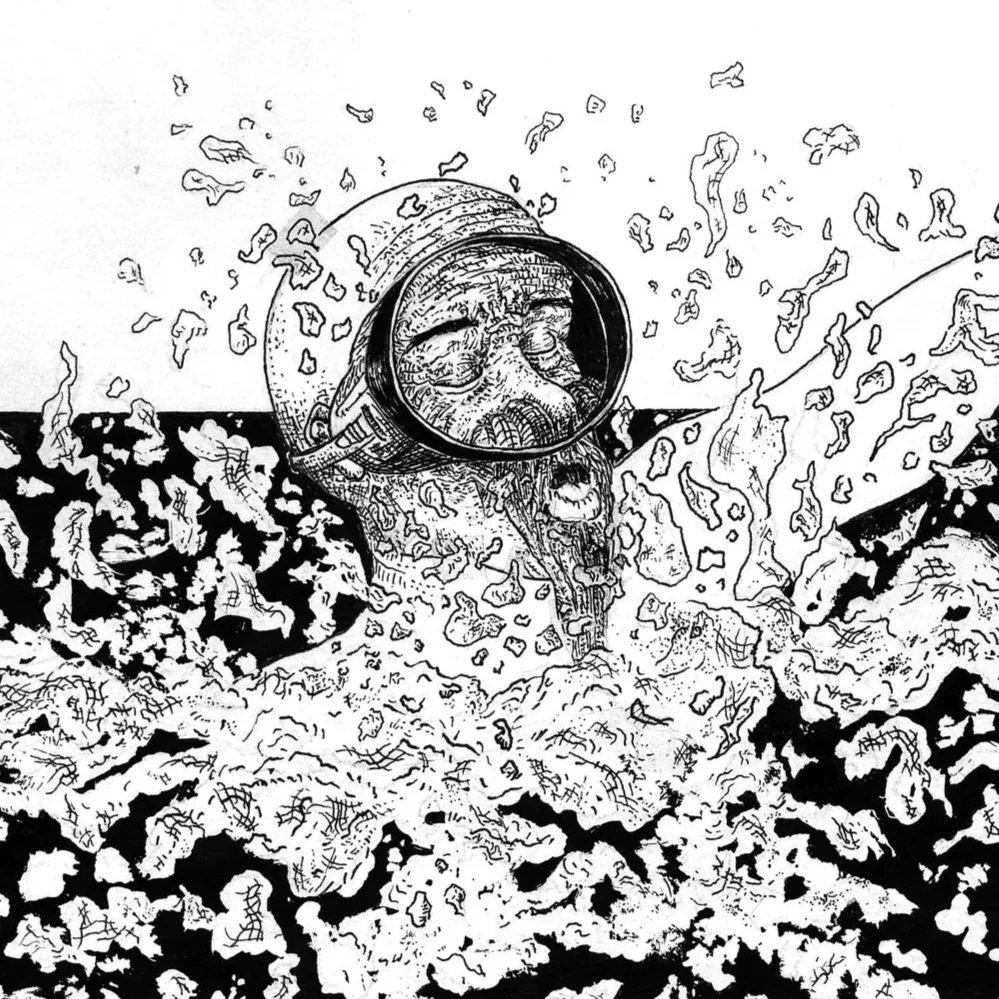
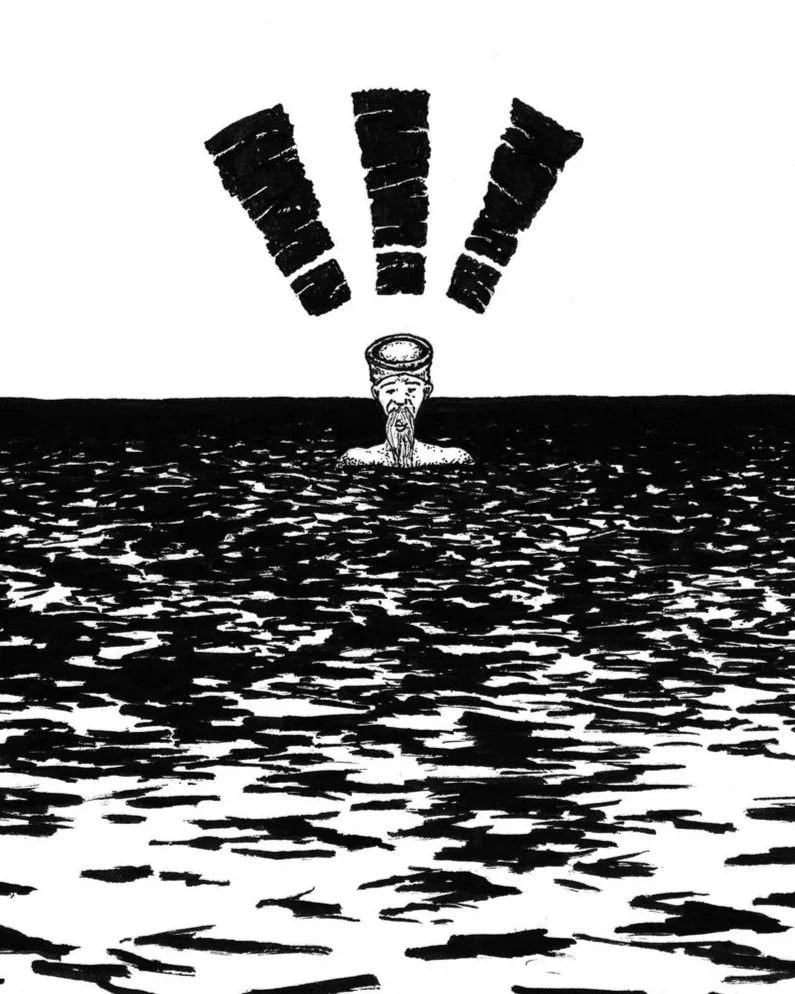
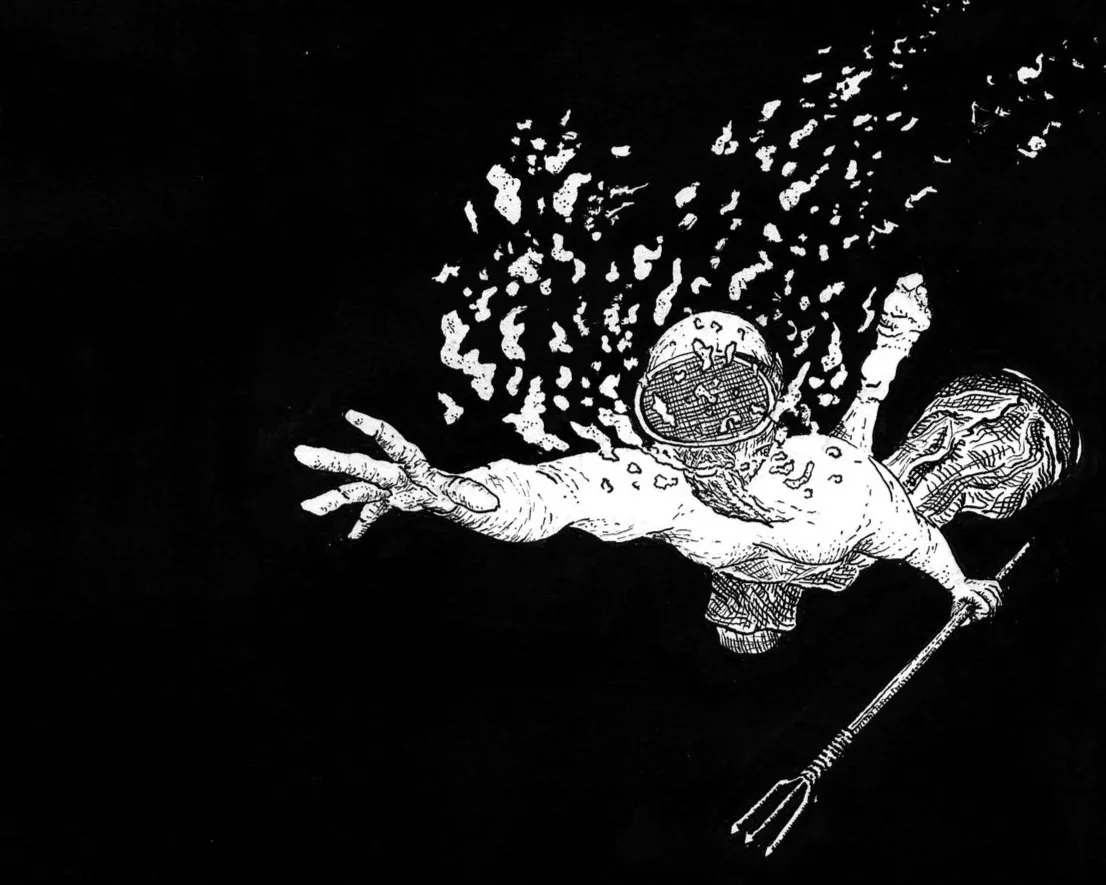
Mississippi Kamikaze is a three works series built around the distance between lightning and thunder — a popular kind of measurement on how far the storm really is. Yet we seem to be accelerating toward it, like a kamikaze.
The engine room feels out of control, overtaken by forces that no longer follow clear direction. The structures that once offered stability begin to dissolve into shifting interests and fragmented perspectives.
Combining graphite drawing and digital painting on 300g Canson paper, the series reflects a growing sense of urgency in an increasingly unstable landscape.
Dimensions 29,7 × 32 cm
Medium Mixed medium - Pencil drawing and digital colouring
printed on 300 gr Canson watercolour paper
Year 2026
I insist on not being sadness
The inspiration for this work came from a poem by José Afonso.
When I read it, I did not find sadness. I found resistance to sadness. A refusal to let it occupy all available space and define the days ahead. The certainty that loss, fear and hardship exist, but do not have to have the final word.
There is a sense of movement in the poem. An invitation to keep walking even when the path is made of skeletons. To climb one more hill. To seek the warmth of the sun. To persist.
At its core, this work grows out of that decision: not to allow sadness to become destiny.
The poem reads as follows in a free translation:
"I insist on not being sadness,
Sobbing over a table.
And no more than this world,
Sending ships to the bottom.
Along a path of skeletons,
Kindling is always planted.
And if old age becomes yours,
Sit it down in the middle of the street."
José Afonso
Gas station
Edward Hopper’s work feels to me like a wooden house standing alone in a plain, beneath a vast American sky. We know the house was once white and that sunlight once fell upon it. But the paint eventually lost its battle against time. Slowly, it gave way to the worn, dehydrated grey of the timber beneath, surrendering to rain, wind and the slow persistence days going by.
We know that children once played and laughed there. A mother hung laundry out in the sun. A father worked the surrounding land. But that was some time ago. The window Hopper opens onto his compositions fills me with a mixture of melancholy, for all those characters navigating the moment and the spaces Hopper placed them in, and immense curiosity. Who are they? They are frozen within that frame. Entire lives hidden from the observer. What losses do they carry? What ghosts accompany them?
“Gas Station” was born from that curiosity. From the desire to follow one of those characters beyond the frame of Hopper’s painting of the same name and see what happens when the station closes, night falls, and nobody is watching.
Fatherhood
Series of mixed media drawings created using graphite, acrylic, charcoal, colored pencil, and oil pastel.
Fatherhood explores the experience of being a father — intimacy, respect, complicity, and generational tensions; the small phrases and everyday gestures that reveal love, concern, care, and even anger.
It’s like controling the mothership on its way to Mars — something too big to fall, something so vast it would not even fit on a cinema screen. That is the scale of the mission.
Until, gradually, we begin to feel smaller as their world expands.
The series emerges as an almost autobiographical exercise, reflecting on responsibility, perception, and change over time.
Dimensions Diferent sizes
Medium Mixed media - Acrylic, graphite, charcoal,
coloured pencil and oil pastel
Year 2026
Tail Chasing
I´m trying to explore the possibility that we are all caught in cycles — repeating the same mistakes, moving endlessly without getting to an actual resolution.
Through the digital repetition of an original watercolored pencil drawing, this mixed media artwork creates a looping composition that reflects collective behavior and shared patterns.
The original text, written in watercolor on 300g Canson paper, introduces a raw, analog element that contrasts with the digital rhythm of its endless repetition.
“What do you call that moment when we feel we didn’t quite make it? A headache that began because we never learned that if a wall is hard, it’s not worth insisting on it? Or worse — that awful feeling that settles in after a night of drinking, leaving us fragile and small? Regrettably, we are like carbon, living deep down where it is dark and monstrous pressures are at work, performing miraculous transformations. One day it loses its shame and, like a peacock, it shines in the hand that searches for love along the walks of Avenida da Liberdade.”
*Translated from the original portuguese text
Dimensions 29,7 × 38 cm
Medium Mixed media - Original watercoloured
pencil drawing with digital repetition
Year 2026
EMEL
Dimensions 16×16 cm
Medium Graphite and watercolour on paper
Year 2026
Our hearts in the wind
“… There … my secret weapon is in place. No more artificially orange-red-skinned man taking over the world again.
Now, it´s up to the bees to spread it across the globe”.
Dimensions 16×16 cm
Medium Graphite and watercolour on paper
Year 2026
Yonkoma
Yonkoma is a traditional Japanese comic format. It consists of four panels,
usually arranged vertically, within which
a simple narrative unfolds.
Four shots to explore an idea.
Less is more. With less, we can build so much. After all, a fire can begin with nothing more than a few twigs, a stone,
and a stick.
Ink on paper
Banana Junkie
“Banana Junkie” is a reflection on growing up and aging in an accelerated world, where truth is constantly reshaped and reinterpreted as it passes through media, language, and everyday experience.
Reality doesn’t collapse all at once — it adjusts itself quietly, continuously, until what once felt stable becomes harder to recognize.
Over time, this constant reconfiguration leaves traces in the body and mind. You begin to adapt without fully noticing, absorbing contradictions as part of everyday life.
It is a state of being formed by acceleration and uncertainty — where perception is always slightly out of sync, and the consequences accumulate slowly, inside each of us.
Dimensions 29,7 × 32 cm
Medium Mixed media artwork - Pencil drawing
and digital colouring printed on 300 gr
Canson watercolour paper
Year 2026
Sabotage
Dimensions 21×29,7 cm
Medium Ink on paper
Year 2021